Core Applications: AI for Threat Detection, Triage, and Prioritization
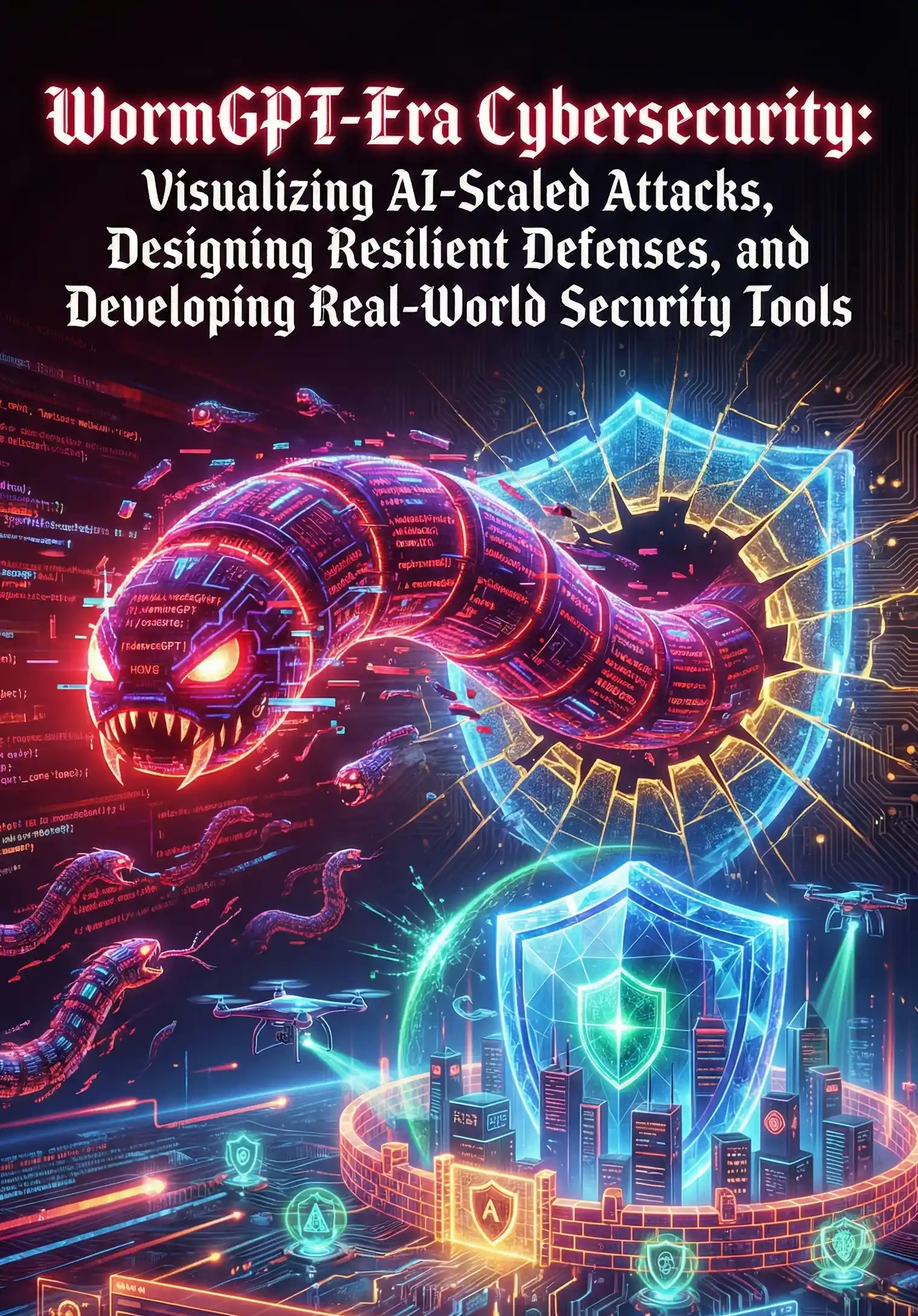
In the contemporary cyber threat landscape, the Security Operations Center (SOC) is often overwhelmed. The deluge of data from Security Information and Event Management (SIEM), Endpoint Detection and Response (EDR), and other monitoring tools creates a state of perpetual alert fatigue. This cognitive overload significantly increases the risk of skilled analysts missing critical indicators of a genuine attack. As adversarial AI, typified by concepts like WormGPT, begins to automate and scale attack campaigns, the need for a paradigm shift in defense becomes non-negotiable. The AI-powered blue team addresses this challenge head-on by leveraging machine learning to augment human capabilities in the foundational SOC functions: threat detection, triage, and prioritization.
Traditional threat detection has long relied on signature-based methods, which are effective against known threats but fall short when faced with novel or polymorphic malware. AI in cybersecurity fundamentally changes this by enabling proactive anomaly detection. Unsupervised machine learning models, such as autoencoders or clustering algorithms, are trained on an organization's specific network traffic, log data, and user activity to build a highly detailed baseline of 'normal' behavior. Any significant deviation from this baseline—a user accessing a server at an unusual time, an application making an atypical outbound connection—is flagged as a potential threat. This is the core principle behind modern User and Entity Behavior Analytics (UEBA) systems, which can uncover insider threats and sophisticated zero-day attacks that would otherwise go unnoticed.
An un-triaged alert is merely noise. The initial investigation to determine an alert's validity and context is time-consuming and repetitive, making it an ideal candidate for automation. AI-driven SOC automation, often integrated into Security Orchestration, Automation, and Response (SOAR) or Extended Detection and Response (XDR) platforms, transforms the triage process. When an anomaly is detected, the AI engine can automatically enrich the alert with critical context in milliseconds. This involves correlating indicators of compromise (IoCs) with global threat intelligence feeds, querying asset management databases to identify the business criticality of the involved systems, and analyzing historical data to place the event in context. This automated enrichment allows the system to autonomously discard a high percentage of false positives and group related, verified alerts into a single, cohesive incident for human review.
graph TD
    A[Alert Generated] --> B{AI Triage Engine};
    B --> C[Enrichment];
    C --> C1[Threat Intelligence Feeds];
    C --> C2[Asset Criticality DB];
    C --> C3[User Behavior History];
    B --> D{Contextual Analysis};
    D -- False Positive --> E[Log & Discard];
    D -- Verified Threat --> F[Group Related Alerts];
    F --> G[Calculate Risk Score];
    G --> H[Assign to Human Analyst];
Once an incident is created, the next challenge is prioritization. An analyst facing multiple critical incidents must decide which one poses the most immediate and significant risk to the organization. Machine learning security models excel at this task by calculating a dynamic risk score for each incident. This score is a sophisticated, weighted calculation based on a multitude of factors: the observed tactics, techniques, and procedures (TTPs) mapped to a framework like MITRE ATT&CK®, the business value of the targeted assets, the presence of known vulnerabilities, and the privileges of the user accounts involved. This data-driven prioritization ensures that analysts consistently focus their efforts on the threats that could cause the most harm, optimizing response time and minimizing potential damages.
def calculate_risk_score(incident_data):
    """A simplified pseudocode for AI-driven risk scoring."""

    # Weights for different factors
    ttp_weight = 0.4
    asset_value_weight = 0.3
    vulnerability_weight = 0.2
    user_privilege_weight = 0.1

    # Normalize inputs (e.g., scale of 1-10)
    ttp_severity = incident_data.get('ttp_severity', 1)
    asset_value = incident_data.get('asset_value', 1)
    vulnerability_present = 10 if incident_data.get('vulnerability_present') else 0
    user_privilege = incident_data.get('user_privilege', 1)

    score = (
        (ttp_severity * ttp_weight) +
        (asset_value * asset_value_weight) +
        (vulnerability_present * vulnerability_weight) +
        (user_privilege * user_privilege_weight)
    )

    # Final score is a percentage
    return min(score * 10, 100)
Ultimately, the objective of integrating AI into the blue team is not to replace human experts but to create a powerful human-machine partnership. AI manages the immense scale and velocity of data, performing initial detection, triage, and prioritization with superhuman speed and accuracy. This frees up human analysts to apply their unique skills—creativity, intuition, and complex problem-solving—to the most nuanced and critical investigations, fostering a more resilient and proactive security posture.
References
- Sarker, I. H., Kayes, A. S. M., Badsha, S., Alqahtani, H., Watters, P., & Ng, A. (2020). Cybersecurity data science: a systematic review of machine learning-based intrusion detection approaches. Journal of Big Data, 7(1), 1-32.
- Al-Duwairi, B., Al-Refai, M., Al-Ayyoub, M., & Al-Kabi, M. (2022). A Comprehensive Review of Artificial Intelligence-Driven Security and Privacy in the Metaverse. IEEE Access, 10, 117135-117160.
- Bhatt, S., Manadhata, P. K., & Zomlot, L. (2020). The role of AI in security operations. In Proceedings of the 2020 ACM SIGSAC Conference on Computer and Communications Security (pp. 1775-1777).
- Zavrak, S., & İskefiyeli, M. (2020). Anomaly-based intrusion detection from network flow features using variational autoencoder. IEEE Access, 8, 108346-108358.
- O'Reilly. (2018). Machine Learning and Security: Protecting Systems with Data and Algorithms. O'Reilly Media, Inc.