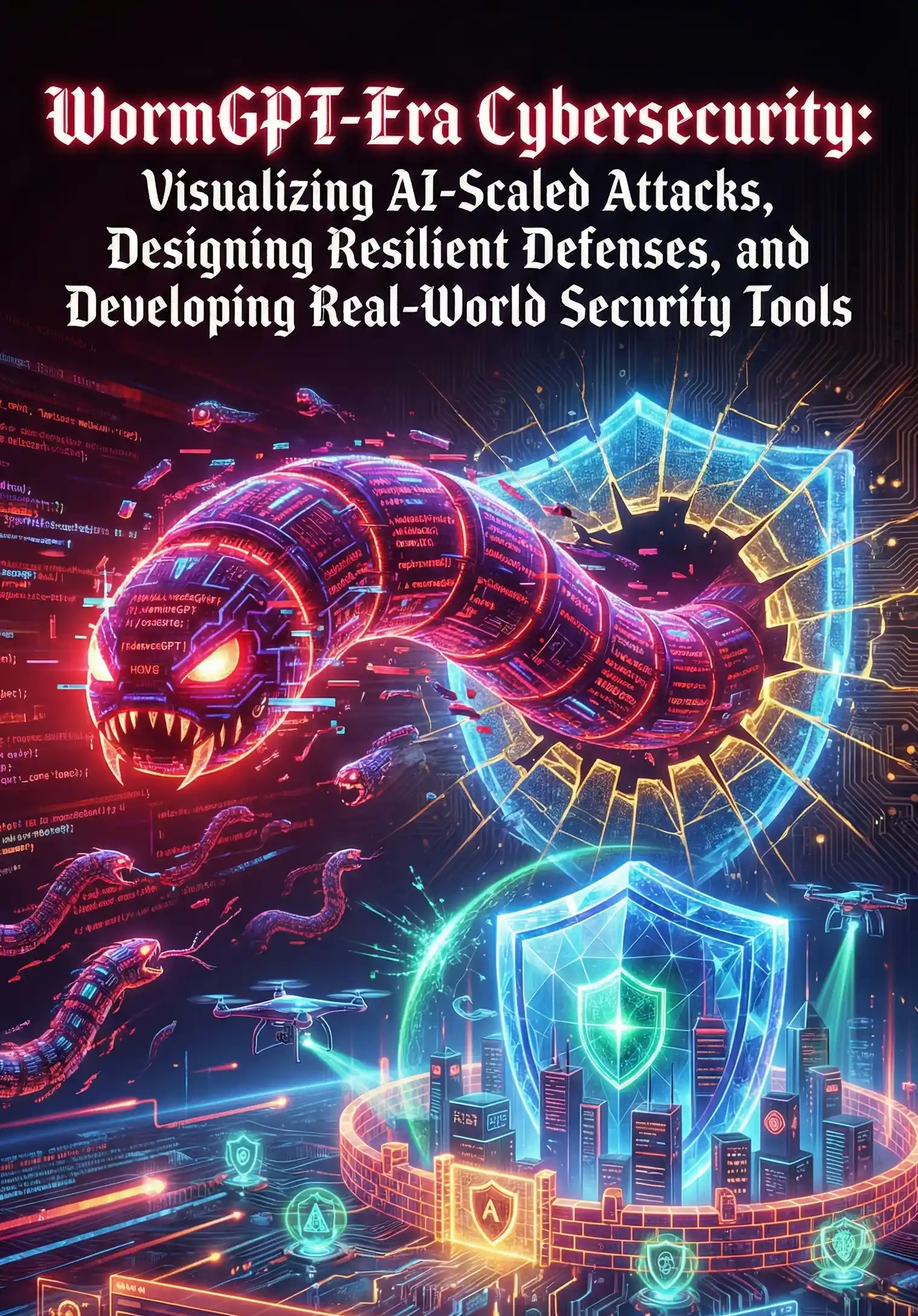
Phase 4: Intelligent Persistence and Evasive Command & Control (C2)
Phase 4: Intelligent Persistence and Evasive Command & Control (C2)
Upon successful exploitation and initial access, a traditional cyberattack enters the critical phases of establishing persistence and maintaining command and control (C2). In the WormGPT era, these phases are no longer static or predictable. The integration of Large Language Models (LLMs) and generative AI transforms malware into an intelligent, adaptive entity, making detection and eradication exponentially more difficult. This section dissects how AI-augmented attacks achieve intelligent persistence and operate highly evasive C2 channels, fundamentally altering the landscape for cyber defense.
Intelligent Persistence: The Self-Modifying Anchor
Persistence is the technique adversaries use to maintain their foothold within a compromised system across restarts, changed credentials, and other interruptions. Traditional methods, such as creating registry run keys or scheduled tasks, often leave static, signature-able artifacts. AI-powered malware elevates this by introducing dynamic, context-aware persistence mechanisms.
An LLM-integrated implant can analyze its environment—the operating system, installed software, user activity patterns, and existing security tools—to choose the optimal persistence strategy. This concept, often termed 'Autonomous Living-off-the-Land (LotL),' involves using the system's own legitimate tools in novel, AI-generated combinations. The malware doesn't just execute a pre-programmed script; it writes the script on the fly, tailored to be maximally stealthy on that specific host. It can periodically rewrite its own persistence mechanism, changing from a WMI event subscription to a hijacked COM object, effectively becoming a moving target for forensic investigators.
/*
Pseudo-code for AI-driven persistence logic
*/
function establish_intelligent_persistence(system_profile) {
  // 1. Analyze environment using onboard model or API call
  let available_methods = analyze_lotl_binaries(system_profile.os_version);
  let detection_signatures = query_local_av_signatures();

  // 2. Generate a novel persistence plan to evade detection
  let prompt = `Given these available binaries: ${available_methods} and known AV signatures: ${detection_signatures}, generate a stealthy persistence script using PowerShell that achieves execution on user login. Prioritize obscurity.`;
  let persistence_script = generative_ai_api.call(prompt);

  // 3. Deploy the dynamically generated script
  execute_command(persistence_script);

  // 4. Set a timer to re-evaluate and modify the mechanism later
  schedule_next_persistence_check('24h');
}
Evasive Command & Control: The Chameleon's Network
The command and control channel is the lifeline for an attacker, used to exfiltrate data and issue new commands. Security solutions heavily scrutinize network traffic for signs of C2 communication, such as unusual protocols, beaconing to known malicious domains, or encrypted traffic with low entropy. Generative AI shatters these detection paradigms by creating C2 channels that are indistinguishable from legitimate network traffic.
We are witnessing the rise of Natural Language Command & Control (NLC2). Instead of using structured, easily flaggable protocols, an AI-augmented implant can parse C2 instructions hidden in plain sight within the text of public websites—forum comments, social media posts, or even product reviews. The LLM on the compromised device is trained to understand specific linguistic cues or steganographic patterns, interpreting a seemingly innocuous sentence like "The market forecast looks bright for Q3" as a command to initiate data exfiltration. This method obviates the need for a dedicated, hardcoded C2 server, making infrastructure-based blocking nearly impossible.
Furthermore, AI can generate polymorphic C2 protocols. The communication method can adapt in real-time based on network monitoring. If the malware detects deep packet inspection on DNS traffic, the LLM can dynamically pivot the C2 channel to mimic legitimate API calls to a popular cloud service like Microsoft Graph or Google Workspace, embedding its data in seemingly valid JSON payloads. This adaptive C2 capability ensures the attacker's communication link is exceptionally resilient.
sequenceDiagram
    participant Implant as Infected Host (AI-Implant)
    participant PublicPlatform as Public Forum/Social Media
    participant Attacker

    Attacker->>+PublicPlatform: Posts comment: "Great article, very insightful for our next project."
    loop Periodic Check
        Implant->>+PublicPlatform: Fetches latest comments/posts
        Note right of Implant: AI model parses text for hidden commands based on linguistic steganography.
        Implant-->>-PublicPlatform: Finds attacker's post and interprets command.
    end
    Implant->>Implant: Executes command (e.g., 'scan local network')
    Implant->>+PublicPlatform: Posts encoded results as a benign-looking reply or new post.
    Attacker->>-PublicPlatform: Reads the reply to receive exfiltrated data.
The dual threat of intelligent persistence and evasive C2 presents a formidable challenge. Defensive strategies must evolve from static, signature-based detection to dynamic, behavioral analysis. AI-powered anomaly detection, which baselines normal activity and flags subtle deviations, becomes paramount. For cyber defense professionals, understanding these AI-augmented attack vectors is the first step toward building resilient security architectures capable of countering the next generation of autonomous threats.
References
- Seymour, J., & Tully, P. (2022). Generative AI for Offensive and Defensive Cybersecurity. O'Reilly Media.
- Al-Fuqaha, A., Guizani, M., Mohammadi, M., Aledhari, M., & Ayyash, M. (2020). Internet of Things: A Survey on Enabling Technologies, Protocols, and Applications. IEEE Communications Surveys & Tutorials, 17(4), 2347-2376. (Note: While broader, this covers IoT communication protocols that can be mimicked by adaptive C2).
- MITRE ATT&CK® Framework. (2023). Persistence - Technique T1547. Retrieved from https://attack.mitre.org/tactics/TA0003/
- Pearce, H., et al. (2023). Examining the Use of Large Language Models for Social Engineering. Black Hat USA 2023 Briefings. Retrieved from the official Black Hat archives.
- Caltagirone, S. (2021). The Diamond Model of Intrusion Analysis. ThreatConnect Press.