The history of cyber conflict is a story of escalating automation. For decades, the digital battlefield was defined by a relentless arms race between defenders hardening their systems and attackers scripting their assaults. From the earliest days of manual hacking, the first evolutionary leap came with the proliferation of automated scripts and exploit kits. These tools, while effective, were fundamentally rigid. They executed predefined commands against known vulnerabilities, operating with the unthinking precision of a machine following a static blueprint. Their logic was brittle; if a target environment deviated from the expected, the script would often fail. This era defined the cat-and-mouse game of signature-based detection, where defenders could identify and block attacks by recognizing their repeatable, predictable patterns.
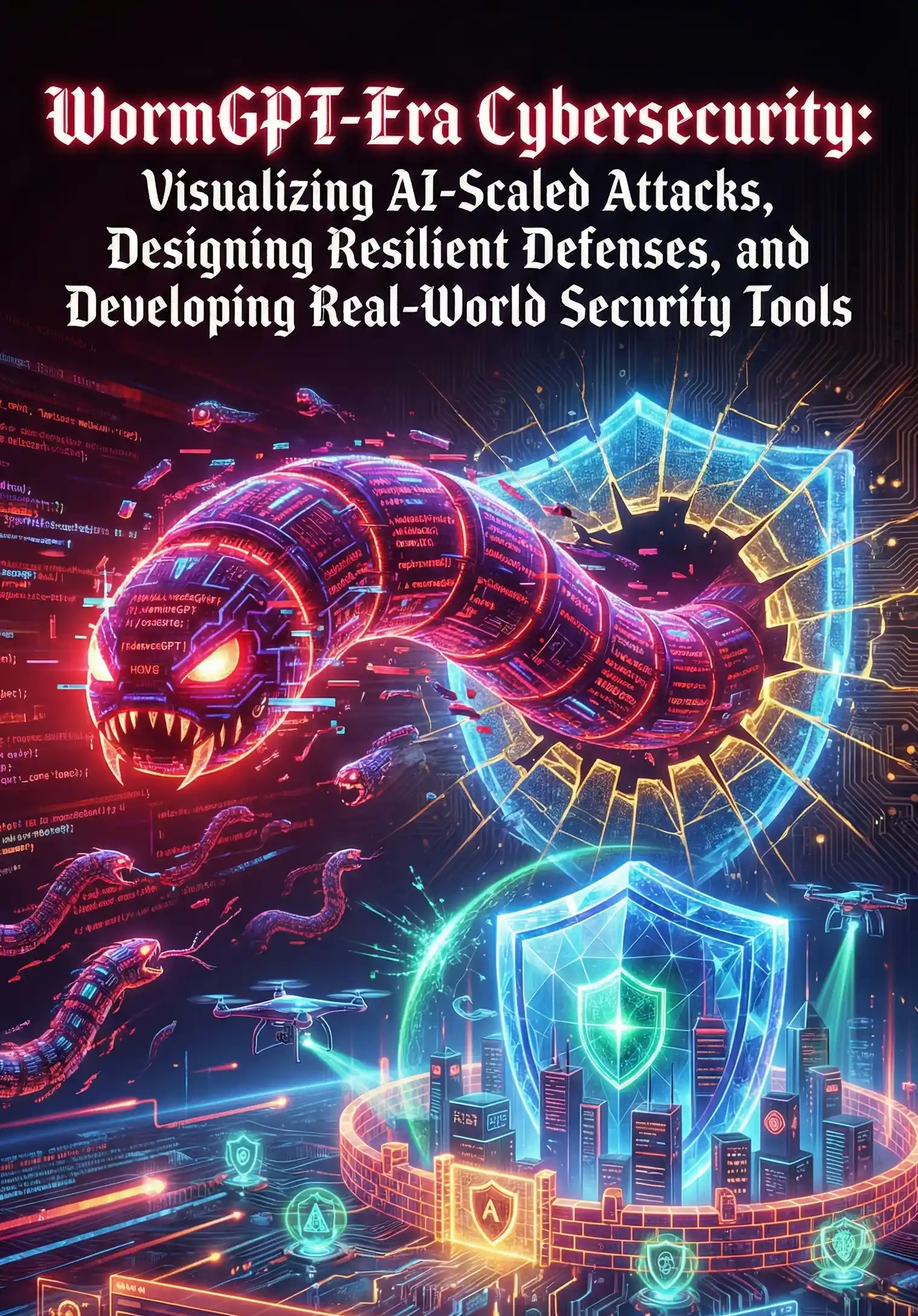
This paradigm, however, has been rendered obsolete. We are standing at the precipice of a new epoch in digital warfare: the dawn of the WormGPT era. This is not merely an incremental step in automation but a quantum leap into autonomy. The transition from automated scripts to autonomous agents represents the most significant shift in the cyber threat landscape since the advent of the internet itself. The new breed of AI-powered malware and malicious agents, exemplified by concepts like WormGPT, does not just follow instructions—it thinks, adapts, and strategizes.
graph TD;
    A[Manual Hacking] --> B[Scripted Attacks & Toolkits];
    B --> C[Polymorphic & Metamorphic Malware];
    C --> D[AI-Enhanced Attacks <br/><i>(e.g., ML for spear-phishing)</i>];
    D --> E[<strong>Autonomous Agents</strong><br/><i>(WormGPT Era)</i>];
Powered by sophisticated Large Language Models (LLMs) and generative AI, these autonomous cyber attacks can independently conduct reconnaissance, identify zero-day vulnerabilities, write novel exploit code, and execute complex, multi-stage campaigns without direct human intervention. An automated script is a tool; an autonomous agent is a virtual adversary. Consider the fundamental difference in their operational logic.
A traditional script operates on a fixed, conditional basis:
targets = ["10.0.0.1", "10.0.0.2"]
vulnerability = "CVE-2023-1234"

for target in targets:
    if scan_for(target, vulnerability) == True:
        execute_payload(target, "payload.exe")
In stark contrast, an autonomous agent functions as a goal-oriented system, continuously learning and adapting its strategy within a dynamic decision loop:
class AutonomousAgent:
    def __init__(self, objective):
        self.objective = objective

    def run_campaign(self):
        while not self.is_objective_met():
            state = self.assess_environment()
            action = self.choose_best_action(state) # Recon, exploit, pivot, etc.
            result = self.execute(action)
            self.learn_from(result)